PIPAC (Pressurised IntraPeritoneal Aerosol Chemotherapy)
A minimally invasive, repeatable treatment for peritoneal surface malignancies — delivering chemotherapy as a pressurised aerosol directly into the abdominal cavity to treat disease not suitable for extensive cytoreductive surgery.
- Laparoscopic Aerosol Chemotherapy Delivery
- Peritoneal Surface Malignancy Treatment
- Repeatable Palliative & Disease-Control Therapy
- Peritoneal Cancer Index (PCI) Assessment
- Minimally Invasive Approach
Overview
Targeted chemotherapy delivery for peritoneal disease, with minimal surgical impact
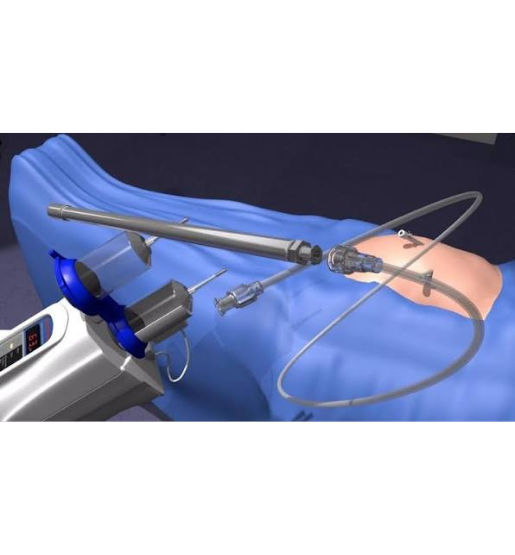
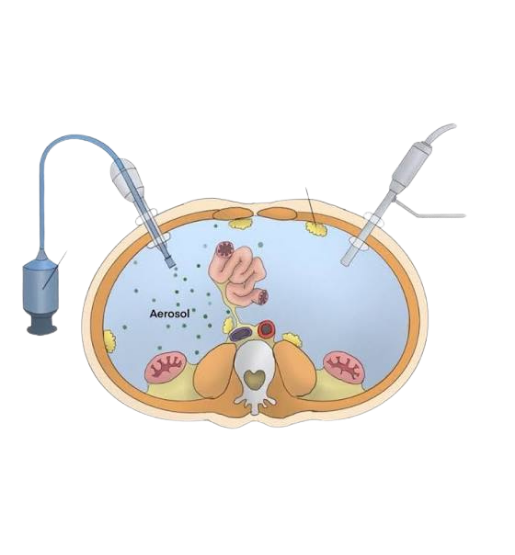
For patients with peritoneal surface malignancy who aren’t candidates for extensive cytoreductive surgery — whether due to the extent of disease, prior treatment, or overall fitness — PIPAC offers a different way to deliver chemotherapy directly to the peritoneal surface, with a much smaller surgical footprint. Rather than circulating heated liquid chemotherapy after major tumour removal, PIPAC delivers chemotherapy as a fine pressurised aerosol through a laparoscopic approach, allowing deeper and more even tissue penetration than a liquid instillation.
The procedure is performed laparoscopically, through small incisions, without an extensive resection. A specialised nebulising device disperses chemotherapy as an aerosol under pressure into the abdominal cavity, held in place for a defined period before being safely evacuated. Because the procedure is far less extensive than CRS-HIPEC, it can typically be repeated at intervals — often every four to six weeks — allowing an ongoing treatment strategy for disease that would otherwise be difficult to manage surgically.
Careful assessment of disease extent, including Peritoneal Cancer Index scoring, guides whether PIPAC is an appropriate option, and every case is discussed within a multidisciplinary tumour board — surgical oncology, medical oncology, and radiology working together to determine whether PIPAC fits within the broader treatment strategy, whether as a standalone approach or alongside systemic chemotherapy.
What We Offer
Procedure Components
The staged components of PIPAC treatment, matched to disease extent and treatment goals.
Peritoneal Cancer Index (PCI) Assessment
Systematic laparoscopic scoring of disease extent across the abdominal cavity, guiding suitability for PIPAC and tracking response over repeated treatments.
Diagnostic Laparoscopy
Initial camera-guided assessment of the peritoneal cavity to confirm disease distribution before proceeding with aerosol chemotherapy delivery.
Peritoneal Biopsy
Sampling of peritoneal tissue during the laparoscopic procedure to confirm diagnosis and assess treatment response over successive sessions.
Pressurised Aerosol Chemotherapy Delivery
Delivery of chemotherapy as a fine pressurised aerosol into the abdominal cavity using a specialised nebulising device, allowing more even tissue penetration than liquid instillation.
Controlled Exposure & Safe Evacuation
Chemotherapy aerosol is held within the abdominal cavity for a defined exposure period before being safely evacuated through a closed system, protecting theatre staff and the patient.
Repeat PIPAC Sessions
Planned, repeated laparoscopic PIPAC procedures at defined intervals, allowing an ongoing treatment strategy for peritoneal disease over time.
Combination with Systemic Chemotherapy
Integration of PIPAC alongside intravenous chemotherapy as part of a broader, coordinated treatment strategy for peritoneal disease.
Ascites Management (When Present)
Drainage and management of fluid accumulation in the abdominal cavity, often performed alongside PIPAC in patients with significant ascites.
Adhesiolysis (When Required)
Careful release of scar tissue or adhesions from prior surgery to allow safe laparoscopic access and even aerosol distribution throughout the abdominal cavity.
Our Approach
The PIPAC Advantage
A minimally invasive, repeatable option for disease not suited to extensive surgery.
A clear, supported path from first consultation through to long‑term follow‑up.
Minimally Invasive Delivery

Performed laparoscopically through small incisions, without the extensive resection required for cytoreductive surgery.
Enhanced Tissue Penetration

Pressurised aerosol delivery allows more even and deeper distribution of chemotherapy across peritoneal surfaces than liquid instillation.
Repeatable Treatment Strategy

The reduced surgical impact allows PIPAC to be performed at intervals, supporting an ongoing approach to disease control over time.
Multidisciplinary, Individualised Planning

Surgical oncology, medical oncology, and radiology coordinate to determine whether PIPAC fits a patient's broader treatment strategy, alone or alongside systemic therapy.
PIPAC is a much less extensive, laparoscopic procedure that delivers chemotherapy as a pressurised aerosol without major tumour removal, while CRS-HIPEC combines extensive surgical removal of visible tumour with heated liquid chemotherapy. PIPAC is generally considered for patients who aren’t candidates for the more extensive CRS-HIPEC approach.
This varies by individual case, but PIPAC is typically planned as a repeated treatment, often performed every four to six weeks, with response reassessed between sessions.
PIPAC is generally used as a disease-control or palliative strategy for patients not suitable for extensive cytoreductive surgery, aiming to manage disease and improve quality of life rather than as a standalone curative treatment.
Because it’s a minimally invasive laparoscopic procedure, hospital stays are typically much shorter than after CRS-HIPEC, often just a day or two, though this depends on your individual case.
Yes. PIPAC is often used alongside systemic chemotherapy as part of a broader, coordinated treatment strategy, as determined by your multidisciplinary tumour board.
Contact
Discuss Your Treatment Options
Every case is unique. Book a consultation to understand the safest and most personalised path forward for you.
Address
# 69, IOA Complex, Royapettah High Rd, Royapettah, Chennai, Tamil Nadu 600014
info@support.com
Our Number
+(0361) 234 567