Head & Neck Cancer Surgery
Precision surgical care for cancers of the oral cavity, throat, thyroid, salivary glands, and neck — combining meticulous tumour clearance with function- and appearance-preserving reconstruction to protect speech, swallowing, and quality of life.
- Oral Cavity & Tongue Cancer Surgery
- Thyroid & Salivary Gland Surgery
- Laryngeal & Pharyngeal Cancer Surgery
- Neck Dissection
- Microvascular Free Flap Reconstruction
Overview
Treating cancer while protecting speech, swallowing, and appearance
Head and neck cancers present a unique surgical challenge — the region houses the structures responsible for breathing, speaking, swallowing, and facial appearance, all within a compact and anatomically complex space. Surgery here demands not only complete oncological clearance but also careful, deliberate planning to preserve function and form wherever possible.
Treatment typically begins with a precise assessment of tumour site and extent — whether in the oral cavity, tongue, throat, larynx, thyroid, or salivary glands — followed by surgical resection designed around clear margins and, where indicated, neck dissection to clear at-risk lymph nodes. When significant tissue is removed, reconstruction using local, regional, or microvascular free flaps restores both function and natural appearance in the same sitting.
Because outcomes in this region depend so heavily on coordinated care, every case is discussed within a multidisciplinary tumour board — surgery, radiation oncology, medical oncology, and speech and swallow rehabilitation working together to shape a plan that treats the cancer while preserving what matters most to daily life.
What We Offer
Surgical & Reconstructive Options
A complete range of head and neck cancer procedures, matched to tumour site, stage, and functional priorities.
Oral Cavity & Tongue Cancer Resection
Precise removal of cancers of the tongue, cheek, gums, and floor of the mouth, with margin-clear clearance planned around speech and swallowing function.
Total &
Partial Thyroidectomy
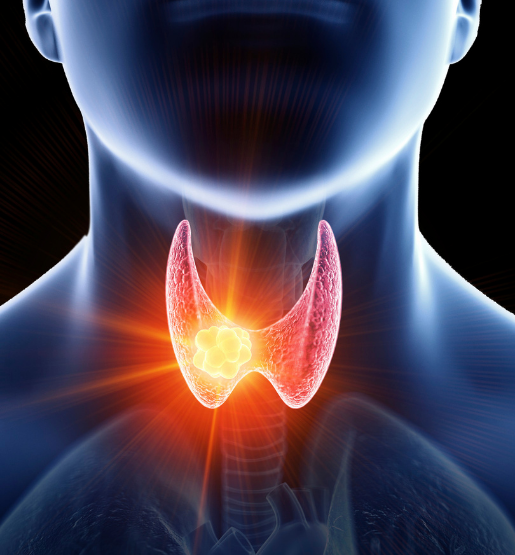
Surgical removal of thyroid cancers, with careful preservation of the parathyroid glands and the nerves controlling voice.
Laryngeal & Pharyngeal Cancer Surgery
Resection of cancers of the voice box and throat, ranging from voice-preserving partial procedures to total laryngectomy for advanced disease.
Salivary Gland Tumour Surgery
Removal of parotid, submandibular, or minor salivary gland tumours with meticulous nerve preservation, particularly the facial nerve.
Neck Dissection
Selective or comprehensive removal of lymph nodes in the neck to clear cancer spread, tailored to the primary tumour’s location and stage.
Maxillectomy & Skull Base Surgery
Resection of tumours involving the upper jaw, sinuses, or skull base, often performed with multidisciplinary neurosurgical collaboration.
Microvascular Free Flap Reconstruction
Restoration of form and function using tissue transferred from another part of the body — such as the forearm, fibula, or thigh — with its blood supply microsurgically reconnected.
Regional & Local Flap Reconstruction
Reconstruction using nearby tissue for smaller defects, minimising surgical complexity while restoring appearance and function.
Tracheostomy & Voice Rehabilitation Procedures
Airway management and voice restoration techniques, including tracheoesophageal puncture, to support recovery after laryngeal surgery.
Our Approach
The Head & Neck Oncology Advantage
Complex anatomy demands a coordinated approach to cure and preserve function together.
A clear, supported path from first consultation through to long‑term follow‑up.
Margin-Clear Oncological Clearance

Complete tumour and lymph node removal following defined anatomical planes guides every surgical decision, ensuring the best chance of cure.
Function-First Reconstruction

Speech, swallowing, breathing, and facial appearance are protected through careful reconstructive planning at the time of tumour removal.
Nerve & Structure Preservation

Meticulous surgical technique protects critical nerves — facial, laryngeal, and others — wherever oncologically safe to do so.
Multidisciplinary, Rehabilitation-Focused Care

Surgery, radiation oncology, medical oncology, and speech-swallow therapy are coordinated from the outset for complete recovery.
Not necessarily. Many laryngeal cancers can be treated with voice-preserving partial surgery; total laryngectomy, when required for advanced disease, is paired with voice rehabilitation options to restore speech.
Reconstruction is planned specifically to preserve swallowing function as much as possible, and speech-swallow therapy is part of the recovery plan to support a return to normal eating.
A free flap uses your own tissue — with its blood supply reconnected under the microscope — to reconstruct the area after tumour removal. It’s a well-established, safe technique that restores both function and appearance in a single operation.
This depends on the extent and location of the surgery. When needed, it’s usually temporary, supporting safe breathing during initial recovery before being removed.
This depends on tumour type, stage, and lymph node involvement, and is determined by the multidisciplinary tumour board as part of your complete treatment plan.
Contact
Discuss Your Treatment Options
Every case is unique. Book a consultation to understand the safest and most personalised path forward for you.
Address
# 69, IOA Complex, Royapettah High Rd, Royapettah, Chennai, Tamil Nadu 600014
info@support.com
Our Number
+(0361) 234 567