Chest Wall Resection & Reconstruction
Specialised surgical care for tumours involving the ribs, sternum, and chest wall — combining complete oncological clearance with structural reconstruction to protect breathing mechanics, chest stability, and appearance.
- Rib & Sternal Tumour Resection
- Chest Wall Reconstruction
- Prosthetic & Mesh Reconstruction
- Soft Tissue Flap Reconstruction
- Multidisciplinary Thoracic Oncology
Overview
Removing chest wall tumours while restoring structure and function
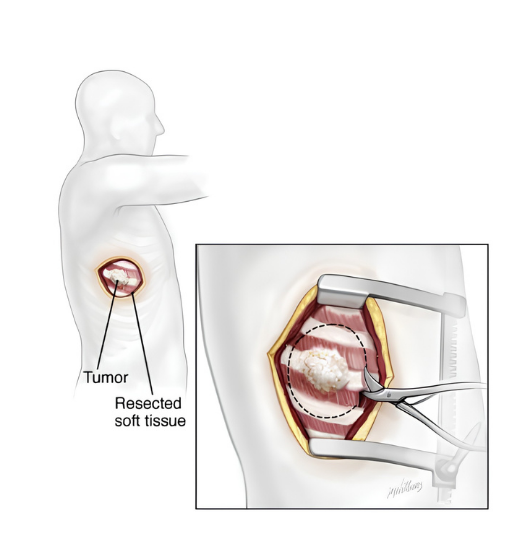
Tumours involving the chest wall — whether arising primarily in the bone and soft tissue, or spreading from a lung, breast, or pleural cancer — present a distinct surgical challenge. The chest wall isn’t just a covering; it’s the structural framework that protects the heart and lungs and drives the mechanics of breathing. Removing a tumour here safely means planning resection and reconstruction together, from the outset, as a single coordinated operation.
Care begins with detailed imaging — CT and MRI — to map the tumour’s extent and its relationship to the ribs, sternum, and underlying lung or pleura, along with biopsy to confirm diagnosis. Surgical resection is planned around a margin of healthy tissue, removing the affected ribs, sternum, or soft tissue as needed. Where the resulting defect is large enough to compromise chest wall stability or breathing mechanics, reconstruction using prosthetic mesh, rigid plating, or tissue flaps restores structural integrity in the same sitting.
Because chest wall tumours often arise as part of a broader thoracic, breast, or sarcoma diagnosis, every case is discussed within a multidisciplinary tumour board — thoracic surgery, surgical oncology, plastic and reconstructive surgery, medical oncology, and radiation oncology working together to shape a plan that treats the cancer while preserving breathing and physical wellbeing.
What We Offer
Surgical & Reconstructive Options
A complete range of chest wall resection and reconstruction procedures, matched to tumour site, extent, and structural needs.
Rib Resection
Removal of tumours involving one or more ribs, with margin clearance planned around chest wall stability.
Sternal Resection
Removal of tumours involving the sternum, often requiring structural reconstruction given the sternum’s role in chest wall integrity.
Full-Thickness Chest Wall Resection
Removal of tumours extending through the full thickness of the chest wall, including bone, muscle, and overlying soft tissue.
Prosthetic Mesh Reconstruction
Use of synthetic mesh to restore chest wall rigidity and protect underlying organs after resection of bone and soft tissue.
Rigid Plate & Bar Reconstruction
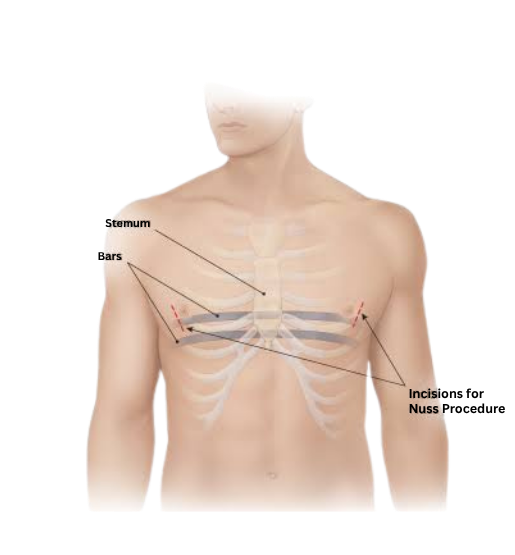
Use of metal or composite plating systems to reconstruct the chest wall skeleton, preserving normal breathing mechanics.
Soft Tissue Reconstruction & Flap Surgery
Use of local or regional muscle flaps to cover chest wall defects, restoring soft tissue coverage and supporting wound healing.
Combined Lung & Chest Wall Resection
Resection of chest wall tumours that involve the underlying lung, performed as a single coordinated procedure for complete clearance.
Metastatic Chest Wall Tumour Resection
Removal of tumours that have spread to the chest wall from another primary cancer, such as breast cancer, performed with curative or palliative intent depending on disease extent.
Chest Wall Tumour Resection
Removal of tumours involving the overlying skin along with underlying chest wall structures, with reconstruction planned to restore both surface coverage and structural support.
Our Approach
The Chest Wall Oncology Advantage
Structural anatomy demands resection and reconstruction planned as one operation.
A clear, supported path from first consultation through to long‑term follow‑up.
Margin-Clear Tumour Clearance

Complete oncological resection with clear margins forms the foundation of every surgical plan, guiding the extent of bone and soft tissue removal.
Structural Reconstruction at the Time of Surgery

Mesh, plating, or flap reconstruction is planned alongside resection to restore chest wall stability in a single sitting.
Breathing-Mechanics Preservation

Reconstruction technique is chosen specifically to protect normal respiratory function and prevent paradoxical chest wall movement.
Multidisciplinary, Coordinated Care

Thoracic surgery, plastic and reconstructive surgery, medical oncology, and radiation oncology coordinate from diagnosis through recovery.
Reconstruction is planned specifically to preserve normal breathing mechanics. Smaller defects may not require reconstruction at all, while larger ones are stabilised with mesh or plating to prevent any impact on respiration.
Depending on the size and location of the defect, reconstruction may use synthetic mesh, rigid plates or bars, or your own tissue in the form of a muscle flap — sometimes a combination of these.
The extent of surgery depends on tumour size and location. Larger resections involving multiple ribs or the sternum are more extensive procedures requiring closely monitored recovery.
This depends on the tumour type — whether it’s a primary chest wall sarcoma or spread from another cancer — and is determined by the multidisciplinary tumour board.
Recovery timelines vary with the extent of resection and type of reconstruction, and typically include a structured period of pain control and chest physiotherapy to support breathing and mobility.
Contact
Discuss Your Treatment Options
Every case is unique. Book a consultation to understand the safest and most personalised path forward for you.
Address
# 69, IOA Complex, Royapettah High Rd, Royapettah, Chennai, Tamil Nadu 600014
info@support.com
Our Number
+(0361) 234 567