Adnexal Mass Evaluation & Surgery
Careful evaluation and surgical management of ovarian, fallopian tube, and adnexal masses — combining precise risk assessment with the least invasive approach appropriate, while ensuring readiness for complete cancer surgery when malignancy is suspected.
- Ovarian & Adnexal Mass Assessment
- Diagnostic Laparoscopy
- Ovarian Cystectomy
- Salpingo-Oophorectomy
- Intraoperative Frozen Section Analysis
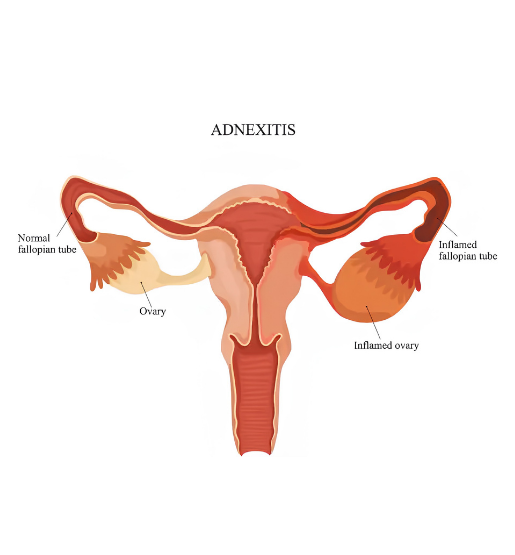
Overview
Careful evaluation to guide the right surgical approach
An adnexal mass — a growth involving the ovary, fallopian tube, or surrounding tissue — is a common finding, and the great majority turn out to be benign. The key clinical challenge is distinguishing, as reliably as possible before surgery, which masses carry a higher risk of malignancy, so that the surgical approach and level of preparedness can be matched appropriately from the outset.
Evaluation begins with ultrasound and, where needed, MRI, alongside tumour markers and validated risk-scoring tools to estimate the likelihood of malignancy. This assessment shapes the surgical plan: masses with a low suspicion of cancer are typically managed with minimally invasive surgery aimed at preserving the ovary wherever possible, while those with higher suspicion are planned with full readiness to proceed to comprehensive cancer staging or debulking surgery in the same operation, guided by intraoperative frozen section analysis if needed.
Because getting this assessment right shapes the entire surgical plan, every case with meaningful risk of malignancy is discussed with gynaecologic oncology input, ensuring the surgical team and setting are appropriately prepared before the operation begins — avoiding the need for a second surgery if cancer is confirmed.
What We Offer
The ICG-Guided Sentinel Node Procedure
An evaluation and surgical approach matched to the estimated risk of malignancy.
Diagnostic Laparoscopy
Minimally invasive camera-guided assessment of an adnexal mass, allowing direct visualisation and, where appropriate, immediate treatment in the same procedure.
Ovarian Cystectomy
Removal of a cyst while preserving the surrounding healthy ovarian tissue, used for masses with low suspicion of malignancy where ovarian preservation is a priority
Unilateral Salpingo-Oophorectomy
Removal of one ovary and fallopian tube, performed when the mass is confined to one side and preservation of the tissue isn’t appropriate or possible.
Bilateral Salpingo-Oophorectomy
Removal of both ovaries and fallopian tubes, considered when both sides are involved or as part of a broader risk-reduction or cancer surgery plan.
Intraoperative Frozen Section Analysis
Rapid pathological examination of the mass during surgery, allowing the surgical team to confirm whether the mass is benign, borderline, or malignant before proceeding.
Comprehensive Staging Surgery (If Malignancy Confirmed)
Immediate extension of surgery to full cancer staging — including lymph node assessment and omentectomy — performed in the same sitting if frozen section confirms malignancy.
Minimally Invasive & Robotic-Assisted Mass Removal
Laparoscopic or robotic-assisted approach to adnexal mass removal, offering reduced surgical trauma and faster recovery for appropriately selected cases.
Fertility-Sparing Ovarian Surgery
Removal or treatment of the mass while preserving the uterus and unaffected ovary, prioritised in patients wishing to retain fertility wherever oncologically appropriate.
Risk-Reducing Salpingo-Oophorectomy
Preventive removal of the ovaries and fallopian tubes in patients with a significantly elevated genetic or familial risk of ovarian cancer.
Our Approach
The Adnexal Mass Advantage
Careful risk assessment guides the right surgery from the start.
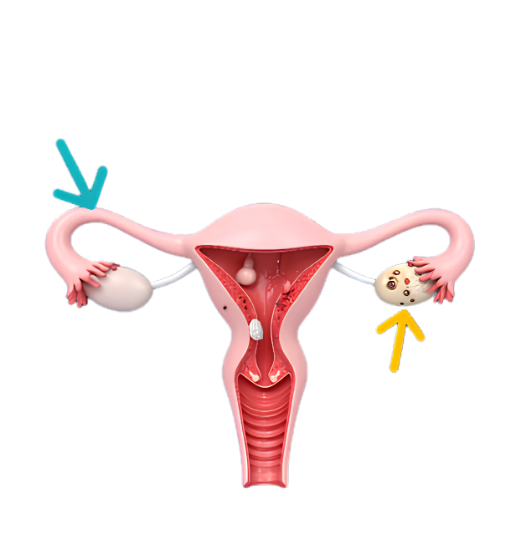
A clear, supported path from first consultation through to long‑term follow‑up.
Accurate Pre-Operative Risk Assessment

Imaging, tumour markers, and validated risk-scoring tools guide a surgical plan matched to the true likelihood of malignancy.
Ovary-Preserving Surgery Where Safe

Cystectomy and other tissue-sparing approaches are prioritised for low-risk masses wherever oncologically appropriate.
Readiness for Comprehensive Cancer Surgery

When malignancy is a meaningful possibility, the surgical team and setting are prepared to proceed directly to full staging or debulking, avoiding a second operation.
Minimally Invasive First

Laparoscopic and robotic-assisted approaches are used wherever appropriate, supporting faster recovery without compromising safety.
Not necessarily. Many adnexal masses can be treated with cystectomy, preserving the surrounding healthy ovarian tissue. Whether the ovary can be preserved depends on the mass’s size, location, and assessed risk of malignancy.
No test is completely certain beforehand, but ultrasound findings, tumour markers, and validated risk-scoring tools together provide a reliable estimate of malignancy risk, which guides surgical planning.
If intraoperative frozen section analysis confirms malignancy, surgery can often be extended in the same sitting to complete cancer staging, avoiding the need for a second operation.
Many masses with low suspicion of malignancy are well-suited to laparoscopic or robotic-assisted removal. Your surgical team will advise on the safest approach based on your individual risk assessment.
This is worth discussing with your care team if you have a significant family or genetic risk. Risk-reducing salpingo-oophorectomy may be an appropriate option depending on your individual risk profile.
Contact
Discuss Your Treatment Options
Every case is unique. Book a consultation to understand the safest and most personalised path forward for you.
Address
# 69, IOA Complex, Royapettah High Rd, Royapettah, Chennai, Tamil Nadu 600014
info@support.com
Our Number
+(0361) 234 567