Comprehensive cancer diagnosis and staging
A thorough, coordinated diagnostic pathway — combining advanced imaging, tissue sampling, and expert pathology to accurately confirm diagnosis and determine the true extent of disease, forming the foundation for every treatment decision that follows.
- Advanced Imaging & Radiology
- Image-Guided & Endoscopic Biopsy
- Pathology & Molecular Profiling
- Cancer Staging (TNM & Site-Specific Systems)
- Multidisciplinary Tumour Board Review
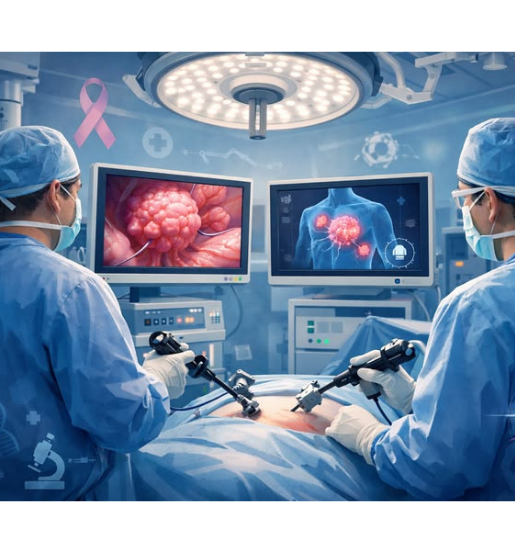
Overview
Getting the diagnosis and stage right, before any treatment decision is made
Every effective cancer treatment plan begins with an accurate diagnosis and a precise understanding of how far the disease has spread. Getting this right — the tumour type, its biological characteristics, and its exact stage — shapes every decision that follows, from whether surgery is appropriate, to what sequence of treatments offers the best outcome. Rushing or shortcutting this step risks a treatment plan built on an incomplete picture.
The diagnostic pathway typically begins with detailed clinical assessment and imaging — CT, MRI, PET, or ultrasound depending on the suspected cancer type — to identify and characterise the area of concern. Tissue diagnosis follows, obtained through image-guided, endoscopic, or surgical biopsy, and is then examined in detail by pathology, often including molecular and genetic profiling that can influence treatment selection. Together, these findings are mapped against established staging systems — most commonly the TNM system — to define the cancer’s exact stage, a critical factor in prognosis and treatment planning.
Because accurate staging often draws on multiple specialties, every case is reviewed within a multidisciplinary tumour board — radiology, pathology, surgical oncology, medical oncology, and radiation oncology working together to confirm the diagnosis, agree on the stage, and shape a coordinated treatment recommendation before any therapy begins.
What We Offer
Diagnostic & Staging Services
A complete diagnostic pathway, matched to suspected cancer type and clinical presentation.
Advanced Cross-Sectional Imaging (CT/MRI)
Detailed imaging to identify, localise, and characterise suspicious lesions, and assess their relationship to surrounding structures.
PET-CT Scanning
Whole-body functional imaging to detect areas of increased metabolic activity, helping identify primary tumours, nodal involvement, and distant spread.
Image-Guided Needle Biopsy
Precise, minimally invasive tissue sampling guided by ultrasound or CT, used to confirm diagnosis with minimal discomfort or downtime.
Endoscopic & Bronchoscopic Biopsy
Tissue sampling of the digestive tract, airway, or other accessible internal sites using endoscopic techniques, often combined with ultrasound for deeper lesions.
Diagnostic Laparoscopy
Minimally invasive surgical assessment used to directly visualise and sample disease within the abdomen or pelvis when other methods are inconclusive.
Histopathology & Immunohistochemistry
Detailed microscopic examination of tissue samples to confirm tumour type, grade, and specific cellular characteristics.
Molecular & Genomic Profiling
Testing of tumour tissue for specific genetic mutations and biomarkers that can guide targeted therapy and predict treatment response.
Sentinel Lymph Node Biopsy
Targeted sampling of the lymph nodes most likely to contain cancer spread, providing accurate nodal staging with a less extensive procedure.
Cancer Staging & Tumour Board Formulation
Integration of all imaging, pathology, and biopsy findings into a formal cancer stage, presented for multidisciplinary treatment planning.
Our Approach
The Diagnosis & Staging Advantage
A precise, coordinated foundation for every treatment decision that follows.

A clear, supported path from first consultation through to long‑term follow‑up.
Accurate, Complete Diagnosis

Every case is built on confirmed tissue diagnosis and detailed pathological characterisation before any treatment plan is proposed.
Precise Staging

Systematic use of established staging systems ensures treatment recommendations are matched to the true extent of disease.
Minimally Invasive Diagnostic Techniques

Image-guided and endoscopic biopsy methods are prioritised wherever appropriate, reducing discomfort and recovery time during the diagnostic process.
Multidisciplinary Confirmation

Radiology, pathology, and oncology specialties review findings together, ensuring diagnosis and stage are agreed upon before treatment begins.
This varies depending on the complexity of your case and the tests required, but every effort is made to move efficiently while ensuring the diagnosis and stage are accurate before treatment planning begins.
Yes, in almost all cases. Tissue diagnosis through biopsy is required to confirm the type of cancer and its specific characteristics, which imaging alone cannot provide.
It’s testing of tumour tissue for specific genetic mutations or biomarkers that can influence which treatments, including targeted therapies, are likely to be effective. Whether it’s needed depends on your specific cancer type.
Staging describes how much cancer is present and how far it has spread, typically using the TNM system — tumour size, lymph node involvement, and distant metastasis. It’s one of the most important factors guiding your treatment plan.
Yes. Every case is discussed within a multidisciplinary tumour board, bringing together radiology, pathology, surgical oncology, medical oncology, and radiation oncology to agree on diagnosis, stage, and treatment recommendations.
Contact
Discuss Your Treatment Options
Every case is unique. Book a consultation to understand the safest and most personalised path forward for you.
Address
# 69, IOA Complex, Royapettah High Rd, Royapettah, Chennai, Tamil Nadu 600014
info@support.com
Our Number
+(0361) 234 567