Ovarian Cancer Surgery
Comprehensive surgical care for ovarian, fallopian tube, and primary peritoneal cancers — combining thorough surgical staging with extensive cytoreductive techniques to achieve the most complete tumour clearance possible.
- Ovarian Cancer Staging Surgery
- Cytoreductive (Debulking) Surgery
- Hysterectomy & Bilateral Salpingo-Oophorectomy
- HIPEC (Hyperthermic Intraperitoneal Chemotherapy)
- Fertility-Sparing Ovarian Surgery
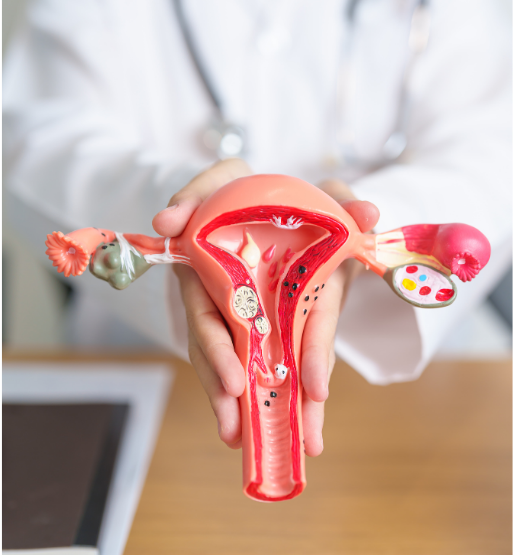
Overview
Achieving complete tumour clearance through thorough surgical staging and debulking
Ovarian cancer often presents at an advanced stage, having spread across the surfaces of the abdomen and pelvis by the time of diagnosis. Because of this, surgery plays a central role not only in removing visible disease but in accurately staging the cancer — findings that directly shape the chemotherapy plan that follows. The extent and completeness of surgical clearance is one of the strongest factors influencing long-term outcomes.
Treatment planning begins with imaging, tumour markers, and often diagnostic laparoscopy to assess how extensively the cancer has spread and whether upfront surgery or chemotherapy first is the safer path. Surgery itself typically involves removal of the ovaries, fallopian tubes, and uterus, along with careful inspection and removal of any visible disease elsewhere in the abdomen and pelvis — a process called cytoreduction or debulking. In appropriately selected cases, this may be combined with HIPEC, delivering heated chemotherapy directly into the abdominal cavity at the time of surgery.
Because ovarian cancer treatment is closely sequenced with chemotherapy, every case is discussed within a multidisciplinary tumour board — gynaecologic oncology, medical oncology, and radiology working together to determine the optimal timing and extent of surgery within the overall treatment plan.
What We Offer
Surgical & Reconstructive Options
A complete range of ovarian cancer procedures, matched to disease extent, stage, and patient priorities.
Total Hysterectomy with Bilateral Salpingo-Oophorectomy
Removal of the uterus, cervix, both ovaries, and fallopian tubes, forming the foundation of most ovarian cancer surgeries.
Comprehensive Surgical Staging
Systematic sampling of lymph nodes, peritoneal surfaces, and omentum to accurately determine cancer stage and guide further treatment.
Cytoreductive (Debulking) Surgery
Extensive removal of all visible tumour throughout the abdomen and pelvis, aimed at leaving no residual disease wherever possible.
Omentectomy
Removal of the omentum, a fold of fatty tissue in the abdomen commonly involved by ovarian cancer spread.
Pelvic & Para-Aortic Lymph Node Dissection
Removal of lymph nodes in the pelvis and along the aorta to assess and clear cancer spread.
HIPEC (Hyperthermic Intraperitoneal Chemotherapy)
Delivery of heated chemotherapy directly into the abdominal cavity immediately after debulking surgery, targeting microscopic residual disease.
Bowel Resection & Diaphragm Surgery
Removal of tumour involving the bowel, diaphragm, or other abdominal organs when needed to achieve complete cytoreduction.
Fertility-Sparing Ovarian Surgery
Removal of the affected ovary alone in carefully selected early-stage cases, preserving the uterus and remaining ovary for those wishing to retain fertility.
Interval Debulking Surgery
Cytoreductive surgery performed after a course of chemotherapy, for patients where upfront surgery isn’t the safest first step.
Our Approach
The Ovarian Oncology Advantage
Advanced-stage disease demands thorough surgical clearance and coordinated treatment sequencing.
A clear, supported path from first consultation through to long‑term follow‑up.
Complete Cytoreduction as the Goal

Every surgical plan is built around achieving the most thorough removal of visible disease possible, a key driver of long-term outcomes.
Accurate Surgical Staging

Systematic, comprehensive staging at the time of surgery ensures chemotherapy and follow-up care are precisely matched to the true extent of disease.
Extensive Surgical Capability

Experience with bowel, diaphragm, and multi-organ resection allows more patients with advanced disease to be considered for complete clearance.
Multidisciplinary Treatment Sequencing

Gynaecologic oncology, medical oncology, and radiology coordinate the timing of surgery and chemotherapy as one integrated plan.
Most ovarian cancers are treated with a combination of surgery and chemotherapy. Whether chemotherapy comes before or after surgery depends on disease extent, as determined by the multidisciplinary tumour board.
It refers to the surgical removal of all visible tumour throughout the abdomen and pelvis. Achieving complete or near-complete removal is one of the most important factors in long-term outcomes.
In carefully selected early-stage cases, fertility-sparing surgery may be possible. This is assessed individually based on your cancer stage, type, and personal circumstances.
HIPEC delivers heated chemotherapy directly into the abdominal cavity immediately after debulking surgery, targeting microscopic disease left behind. It’s used in select patients based on disease extent and overall fitness.
This depends on whether the cancer has spread to involve the bowel. If needed, bowel resection is performed as part of the same operation to achieve complete tumour clearance.
Contact
Discuss Your Treatment Options
Every case is unique. Book a consultation to understand the safest and most personalised path forward for you.
Address
# 69, IOA Complex, Royapettah High Rd, Royapettah, Chennai, Tamil Nadu 600014
info@support.com
Our Number
+(0361) 234 567